
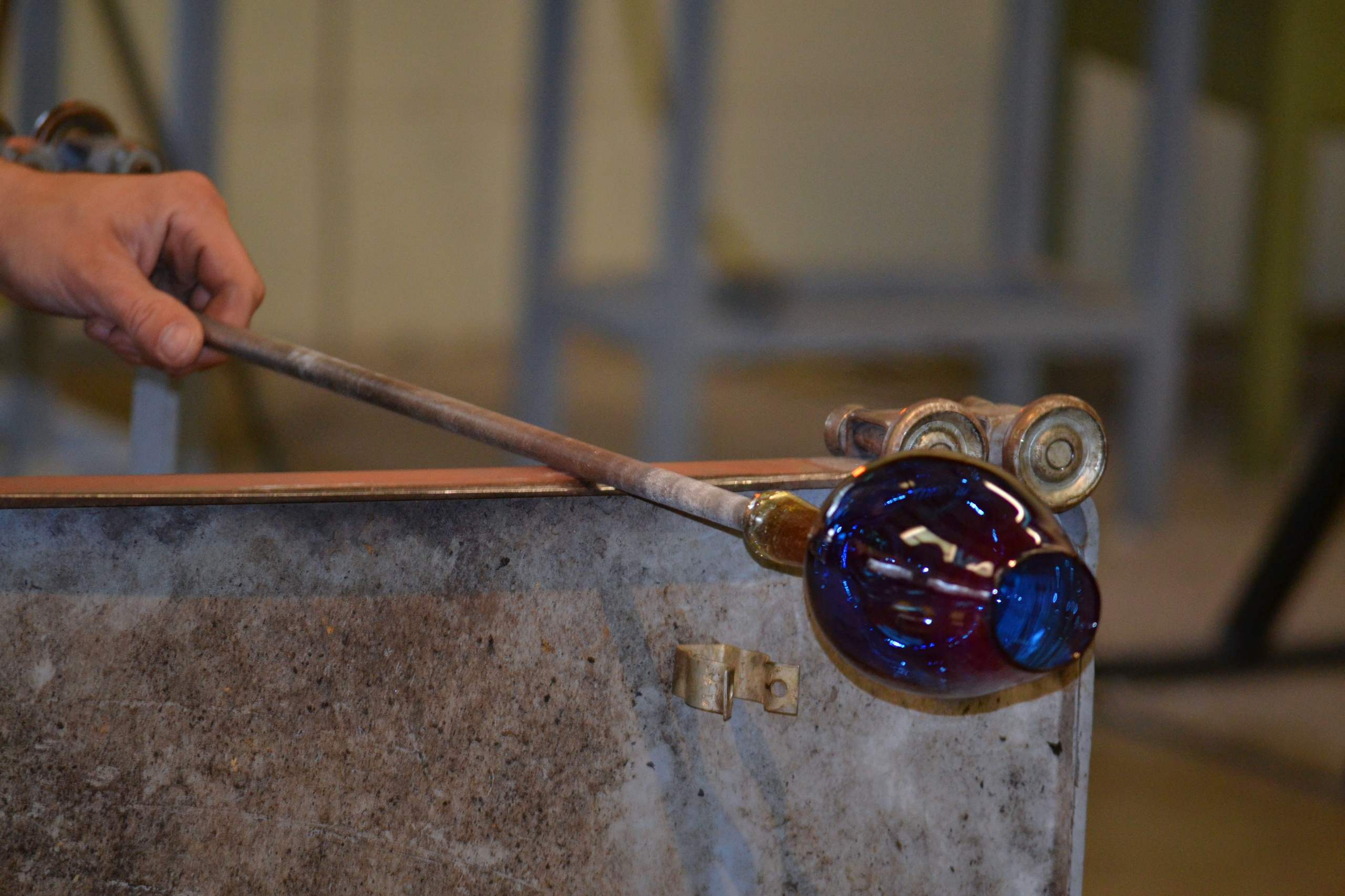
While all art material responds to its setting in a particular way, glass requires light in ways no other medium can. A painting can be admired in almost any circumstance, but the same work in glass could seem a completely different piece depending on the time of day, the angle of sunlight, or the nature of nearby light fixtures. For people working toward a career in glass art, the importance of light is one of the first fundamental concepts that they will learn.
Light is not the medium that illuminates the piece of glass that it happens to be near, but the glass that creates the art. A piece of glass could be transparent, textured, or tinted. This makes it possible for light to be reflected, refracted, absorbed, or changed into a different color entirely. Therefore, it can be common for a glass artist to consider light and its possibilities as far ahead of the creative stages in the design process as possible.
Glass is especially responsive to color. Whereas pigments in paint bounce light to the observer, the color of glass only affects the light as it passes through. This effect causes glass to appear luminous in its color. However, the thickness of the material can change this effect, as can its opacity or transparency.
Textured glass interacts with light differently than smooth surfaces. While both can create beautiful effects, they can do so in distinct ways. Texture can reflect light, blur, soften, or otherwise change the look and feel of a glass piece. Many artists work these ideas into the design of their piece on purpose, in order to produce a specific reaction from observers or a particular effect in their own work.
The space in which a piece of glass art resides influences how light reacts with the artwork. A stained glass window in the morning could appear one set of colors, and then change its hue by midday or night. Fused or stained glass may produce different effects in light at different times of the day. A fused glass piece may create a colorful shadow, for example, which changes during the course of the day. These characteristics are part of what make glass art a popular hobby and career path, as the artwork could seem to change over time.
Placement is often as important a consideration as the design itself. Professional glass artists must consider where their artwork will end up and what effects that location will have on their work. Natural light, artificial light, and nearby materials will all influence the way that observers view a piece once it has been created and installed.
Advances in science and technology are making new options in design and manufacturing possible. Current artists have used light to create new styles and effects, such as illuminated LED art. Glass can be designed to layer, reflect, or change in appearance under certain conditions. Modern techniques are constantly creating new boundaries for glass art, while still honoring the basic nature of the relationship between glass and light.
Many future glass artists will find out about the importance of light before they have much of a practical background with the medium. Understanding light is as important as knowing how to work with it, whether it is in the form of observing how it reflects, the effects it has on shadows, or its interaction with transparency and color. This knowledge can inform all other artistic choices that artists make in their career.
In a way, glass is an art material that changes over time. Although it might be completed once it has been fired or shaped, the appearance of the piece can still change as the light around it changes. Light is not static, so glass artwork will never truly be still.
Glass art is about light, but it is also about space. It takes understanding light in order to know how to create a piece that will move with time and environment.