
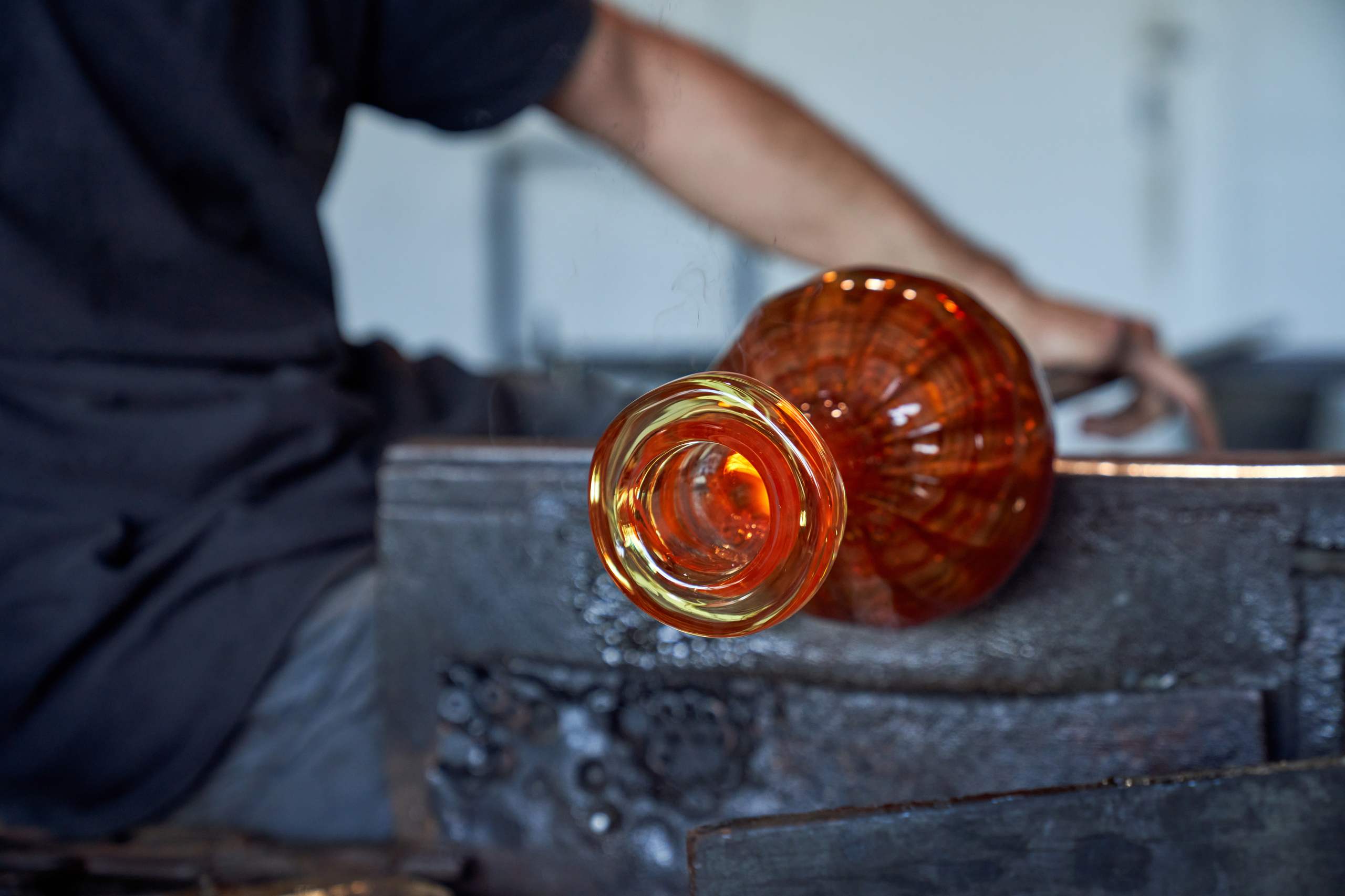
For hundreds of years, artists and artisans have been intrigued by glass. As opposed to more conventional media, it has unique optical properties, its transparent, reflective, colored and textured quality means that works in glass can look very different under different light or viewed from different angles. This is only one reason why glass remains one of the most interesting mediums in art today.
In addition to their artistic talents, glass artists must have a working knowledge of the technical aspects of working with glass: the heat, the glass itself, its form and how it reacts to being heated. The slightest difference in temperature or glass type can lead to vastly different results, so there is a great deal of artistry in being able to do glass work.
Light is perhaps the single most important aspect of glass, and it’s what separates glass from more traditional art. Glass can look very different under different types of light, bright and translucent in the daylight, glowing and rich in color in electric light. The reflection and coloring will continue to change all day and all the time, depending on the ambient light.
There are many different types of glass and styles of glass work, from classic stained glass pieces, to fused glass, glass layers, engraving and sculpting. Each technique allows for different opportunities and possibilities and provides an opportunity for individual expression.
There is also a certain element of unpredictability that is attractive to many artists. The exact temperatures inside the kiln, the duration of the heating period, and the manner in which the glass reacts to cooling all have an effect on the final appearance of a piece. While it is possible to learn what to expect with experience and knowledge of the glass type, it is possible to produce a very unpredictable result. And sometimes those unexpected effects can turn out to be some of the most interesting aspects of the finished work!
Glass is also attractive for the fact that it encourages slow, methodical production techniques that take a lot of patience. Many forms of art allow for instant feedback, just one example is that you can see exactly what you have painted on a canvas. But with glass, there are a number of steps involved, the process of making a piece from scratch may involve multiple kiln sessions of varying temperature and length of time before you can produce the desired result. This means there is less room for error, and more opportunity for thoughtful design and planning.
The popularity of glass has grown in recent years along with people’s interest in creative, hands-on hobbies. There are programs for teaching people how to glass, and the equipment required for glass at home has become more accessible and affordable than it’s ever been.
Learning to work in glass is an exciting opportunity to not only acquire knowledge about materials and the production process, but to develop skills in critical thinking and precision as well. Working with glass requires an appreciation for both art and the laws of physics, learning how different types of glass and different heating and cooling methods affect the final product becomes a great lesson in the relationship between design and science.
In addition to the beautiful, luminous properties of glass, it can also capture a moment of creativity and experimentation. When we look at a finished piece, we can admire not only the aesthetic quality of the glass, but the thought, planning and skill involved in its creation. It is truly a unique art medium, combining elements of science, art and technology.