
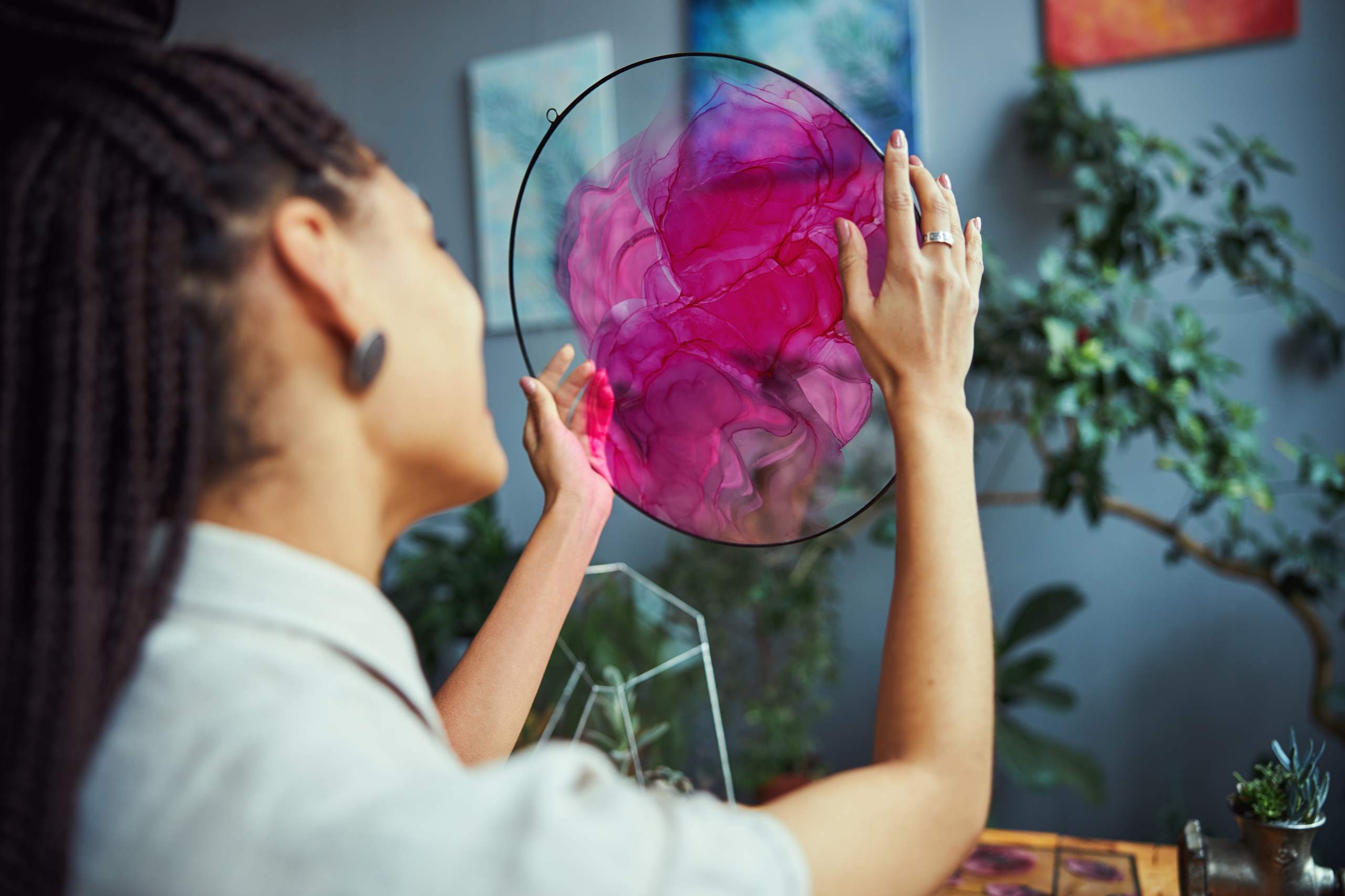
As one of the most popular techniques in glass art, glass fusing brings glassworkers of all levels together in pursuit of new shapes, colors, and textures. The process of fusing glass involves carefully stacking pieces of glass that are compatible with each other, then putting them into a kiln to heat up and fuse together. Although the basic process of glass fusing sounds simple, it is actually quite versatile.
First you’ll need to come up with a design. What pieces and types of glass will you need to create your project? What colors? How many layers? Which piece will sit on top of the others? Will you be using transparent and opaque glass, and what effects are those two types of materials going to have on each other when they melt together? Depending on the placement of the glass, you’ll create an entirely different finished piece.
Now it’s time to put those pieces into the kiln, heat them up, and let them do their thing! How you heat up the pieces will determine how the glass behaves when it starts to melt. At lower temperatures, the pieces will keep some of their texture from their original shape. Higher temperatures, though, will allow the pieces to blend into a whole, with less distinct texture.
A lot of the excitement of glass fusing is the way glass interacts with color when it’s melted together. If you have transparent layers on top of each other, you’ll get layers of color within a design. When you hold your finished piece up to the light, you might get a very different effect from the way it looks on the table in front of you.
As you’re making glass-fuse designs, it’s important to understand the different materials that are available and how to make pieces of different types of glass melt together in a harmonious way. Different glass types react very differently from each other when you heat them up, and the way they contract as they cool. If you don’t have compatible pieces of glass to begin with, you’ll likely end up with a cracked or broken piece later on. You also need to know how to control the way glass reacts to heat, so that it melts and fuses correctly.
The cooling down process for your glass pieces is just as important as the way you heat them. To avoid breakage, they’ll be placed in the kiln after you reach your goal temperature to undergo an annealing process, where the glass is allowed to cool in a controlled, slow process so it isn’t subjected to rapid temperature changes that could crack it. The result is a durable piece that holds all the qualities that you want from the design you originally created.
Fused glass opens up so many creative doors. There are many different mediums that you can add to your design, or combine with the colored glass, such as powders, glass strings, or crushed glass. Some glass artists use their designs to create functional pieces like plates or bowls, while others go for an artistic sculpture. There’s a reason fused glass art has become such a hot trend among both amateur and professional glass artists. The wide range of possibilities and materials makes it a great option for just about anyone, whether you have a specific project in mind or you just want to experiment with different colors, textures, and shapes.
One of the things that draws artists to glass fusing is the opportunity for artistic expression. Although the technical aspects, like temperatures and material compatibility, help you create a project from start to finish, the artistic possibilities are endless. Once you’ve mastered the technical skills, you can let your creative side do the talking as you experiment with different colors and textures to create a beautiful piece.
It’s always exciting to get that first look at your design after taking the finished piece out of the kiln. During the heating, firing, and annealing process, there’s no way for you to tell what the finished result is going to look like, and this creates an anticipation that you might never find with other mediums. Even for glass artists who are experienced in the techniques and skills involved with glass fusing, it can be thrilling to open the kiln and see an entirely different design. You might discover a detail you didn’t notice until the last step, and get inspired for your next project.
Glass fusing is just one of many ways that art and science work together to create a beautiful piece of artwork. Using heat and color as your primary mediums, you have the power to transform simple pieces of glass into art that can be displayed on your walls, sitting on your desk, or hanging up a window with the sun shining on it.